19th Wedding Anniversary

This is how it started. On that day nineteen years ago I jumped out of bed frantic talking, talking, talking all the way out of the house and along the track to the feed store. “I’m late already. I’m already late. I don’t believe this. What happened to early? It’s already after six and I’m already late. Where’s the sun? Why’s it still so dark? Oh, shit look at the sky, look at the bloody sky. And it’s really raining. It’s raining on our wedding day.

And I’m taking too long doing this, why are all the feed bins empty now, why didn’t I think of this yesterday when they were already nearly empty. And why is it raining so very hard?”

Scuttling along in too-big clogs, falling off their wooden edges unbalanced on the uneven ground and carrying the manger I kept up a persistent muttery mumble, trying to calm matters down and to ignore the rain: “It’s fine, it’s not that late, I can still get showered and have my hair in curlers in plenty of time for my hair to dry by eleven” and scurrying up to the gate she hooked the manger onto it, and gave the Grey Horse a sudden and unexpected pat. Much alarm and headshaking, and a suspicion that she really was quite as mad as he had always believed, the Grey Horse stood back from his breakfast. I sighed, “oh don’t be so silly” before reaching out once again but this time much more slowly, to gently pat the Grey Horse his good morning. Kissing his chaff dusted nose I said: “enjoy your breakfast”.

Back indoors the peace and calm one might expect so early on a Saturday morning was completely absent. Instead there were a dozen or so Swedish relations, long lost friends and teenagers, munching their various ways noisily through a host of breakfast stuff: teas, juices, coffee and the rest. The scene of formless mess only added to the surreal and thunderstruck sense of the day. I couldn’t imagine how the day had suddenly turned into chaos so very soon. Tea at least was already made, so grabbing a mug I hurried upstairs to the shower, barely noticed.

At least the shower was hot. The battle for the hairdryer was about to commence between Hannah and Matilda, both of whom had already showered while I was getting drenched in the rain. When I got out of the shower, only mildly less hysterical, the plan had been to put my hair in curlers and to set the hairdryer on them. I had had in mind a cascade of blondish reddish curls. “We’re nearly finishing Mummy. We won’t be long. Your hair dries quicker than ours”. Gorgeous girls 13 and 14 years old, bubbling over with youth, beauty and innocence still, and in a moment so precious still ours, still our lovely little girls.

So OK. OK. I gave give up on the idea of leisurely drying and cascading glory and concentrated on the dressing bit of the morning. Suddenly everything, even the simplest part of getting ready seemed too complicated to manage. No room. No space, just a blind, fearful panic, wondering where Paul was and whether it was all as mad for him, tangled up with the business of breakfast and all those visiting Swedes. Unlikely somehow and I imagined him serene and slightly excited on the outside, cool, calm and in control and probably quite oblivious to the raging skies beyond the kitchen windows.

Outside the weather was worsening with each passing moment. Lights on indoors in July in the morning? Whatever was happening. The thunder rolled, the girls kept squeaking and fidgeting and I sat down in the corner still in my dressing gown and wondered what to do next. Fortunately someone else was there to egg me gently on to the day’s next steps. I was not alone and true to the traditions of brides and maids of honour, Joanne serene, calm and moving slowly into the room gave me a sudden and loving hug. “It’s the day! Today’s the day. Are you alright? Have you had anything to eat? There’s still toast and tea. Paul’s taking care of the rabble downstairs. All you’ve got to do is have your tea and relax and get dressed. Isn’t it fantastic!” I held her hand tightly and said in  a tiny voice: “Why’s it raining? What’s with the thunder? What’s happening?” And Joanne laughing “all of nature’s getting up and getting ready, so come on, what are you doing?” And with a brusque and bossy “Get your mother another cup of tea and a biscuit”, Joanne pushed the morning machine into gear, sat me down and started getting to work on my hair.

It’s been 19 years and they’re all hovering around my head still. The joys, the less-than joys, the amazing experience of seeing our children grow into such wonderful people. Thank you to everyone who made that day so memorable and thank you to Paul, Hannah, Morgan and Matilda for giving me such a fabulous, joyful and loving family.


“Only the shallow know themselves.” —from Oscar Wilde’s “Phrases and Philosophies for the Use of the Young” (1882) 

You don’t know me.

You don’t see me.

You can’t find me.

You don’t know me.

And of this I am certain.

Being old is useful in these days of death and desperation. Death because of Covid and Brexit, stealing lives and lifestyles. Desperation because everyone is so obsessed with being noticed, with being included, recognised, acknowledged. It’s a curious thing this obsession. For those of us who’ve been around awhile, it looks like disease.

The online echo chamber amplifies and distorts, and social media platforms put you, and only you, you, you, you at the heart of every message. Seeing it is mostly boring, if compelling. Being seen is wonderful for those frantic to shine in gleaming limelight and get lost in virtual applause, acclaim. Except that the social media platforms must put all of us at the centre of attention regardless of our mediocrity, so we are none of us individuals just data sets. Yet if the platforms don’t prioritise everyone on some individualised basis, advertisers won’t be happy.

In this saturated and anonymous environment a defined identity is necessary to concepts of self, no matter how arbitrary and divisive. Individual identities must be categorised, celebrated and yelled about, to confirm that we know who we are, that we are entitled to recognition, that we exist at all. Without the platforms and classified identities, we are apparently nobodies. But coming to terms with one’s own ordinariness is part of growing up. Maybe you cannot see that until you’ve finished doing it and only then can recognise the curious paradox that we are all ordinary, and yet extraordinary too. The social media collective thrives on this paradox. Advertisers want maximum engagement and frequency in order to sell more stuff. Definitions and categories provide the platforms with data to help them do that. And we all participate.

But identity is a fragile thing, a thing in constant flux. It is not caged. Identity is vulnerable and frail and it should not be trivialised. Nor should those craving acknowledgement and recognition use identity to bully others into sharing their point of view. Identifying a target to blame for inequalities and unfairness, does not justify attack. Responsibility for being nasty about perceived slights does not go away just because you find someone to blame. The whingers share far more than being victims of generic, universal unfairness. They truly suffer cruelly. White male supremacy, imperialism, sexism, racism, accentism (it’s all the latest rage), genderism (coming to a paranoia near you soon), heightism, fatism, abilityism or some other -ism is the root of their undoing. How about I-don’t-care-ism?

We cannot thrive in a world where a group’s collective identity is considered to matter far more than anyone else’s. Such vanity combined with victimhood stifles interaction and debate. It’s toxic and poisons all chance of dialogue, discussion or inclusion. It excludes those beyond the group, those who challenge the party line, or who step unthinking onto tender toes. Blocking the transmissions we all send out and receive, leaves only static monotony on a single unrelenting channel.

Identity and knowing who and what you are is not about priviledge or advantage. Knowing who and what you are isn’t even a fact for hordes of people. Identity is often a latecomer to the character party. We could call it a very twenty-first century problem, this idea that we all have to be secure in our own identities and that everyone else has to recognise and celebrate those identities. Let’s instead strive for a little more humility, a little more kindness and greater breadth in our world views. Let’s have a little more appreciation of where and how the lines are drawn, so that they mark a point of connection and not of divergence. 

You don’t know me.

You don’t see me.

You can’t find me.

You don’t know me.

And of this I am certain.

https://en.wikisource.org/wiki/Phrases_and_Philosophies_for_the_Use_of_the_Young

https://en.wikipedia.org/wiki/Oscar_Wilde

Lessons in Chemistry by Bonnie Garmus – a review

This book has already been widely reviewed by the professional reviewing community. But I bought my copy and want to tell you why you should do the same.

This is an astonishing debut novel, but its slickness and technical competence probably reflect the fact that the author has many years as a copywriter under her belt. That said there is nothing hackneyed or formulaic about the writing. It’s compelling, sophisticated, complex and loaded with stuff to make you think. The protagonist Elizabeth Zott is a chemist who falls in love, does not marry, loses her lover but gains their child. She’s obsessed with rowing and cooking and ends up hosting a cooking show on television that becomes hugely successful to everyone’s surprise.

But that is in the sixties and Zott’s story begins in the fifties at a research facility where everyone envies this beautiful, committed and gifted woman. Other women at the place are jealous and conniving, and groping by male colleagues is de rigeur, in line with the times. Being old myself I am familiar with the trope although in my case it was the seventies rather than the fifties and by the seventies men were a little less obvious in their abuses. It is still a common if even less overt occurence. And people still do their best to thwart a woman’s progress especially if she is pretty and unconventional as Elizabeth Zott is. A belief persists that if one is pretty one should a) expect uninvited sexual attention and b) not bother with a career because being pretty means one doesn’t need to. It’s a mentality that is still deeply ingrained and not just amongst men.

Setting her story in the fifties and sixties allows Garmus to illustrate with sharp focus a serious problem that persists to this day. Only by bringing it into stark and shocking contrast can we all address it, especially the men who still don’t get the point of why women want to be treated as equals. Women are still categorised according to their appearance and attitude, not just by men for whom there isn’t the same depth of problem. The truism runs deepest in the male psyche, especially in that of the chivalrous and charming ones. Most of them so miss the point and the ones who don’t are in denial. The ones who persist with being charming and chivalrous and do get the point are the keepers. But they are admittedly rare.

Elizabeth Zott is necessarily an extreme character. She responds to every situation with varying degrees of detachment based on what she observes and her understanding of it. She refuses to play the role society has assigned because it hasn’t occurred to her that she has a predefined role. She’s been incidental and not central in her own life’s story, so she has no reason or space for self-doubt. She doesn’t even consider that she’s being difficult and unexpected because she’s not. Zott’s being honest, unfiltered and truthful, true to herself and we could do with more women like her. Zott is a full-on distillation of femininity, independent objectivity, integrity and intuitive intelligence. She is also intensely warm, passionate and loving. She is deeply touched by consistently bizarre tragedies and loss. She is consistently cheated and molested by colleagues, but allows none of it to pollute her sense of self or truth.

As the book progresses we learn more about Zott’s bizarre back-story and that of her lover, chemist and potential Nobel candidate, Calvin Evans. The book just gets more and more compelling so it becomes necessary to take a break from the narrative and set the book down. You realise that you are absolutely loving the characters and that the novel’s gripping pace is taking you too quickly to the end. I had to put Lessons in Chemistry aside at least twice because I didn’t want it to end. And I wanted to think of ways in which the many narrative strands would be resolved. There was no great and unexpected twist at the end, but the end did come far too suddenly. This was the only flaw in an otherwise immaculate reading experience.

A helpful editor should have pointed out to Bonnie Garmus that there needed to be about twice the scene setting and at least double the story telling for that final chapter. It really should have been spread over a couple of chapters to be consistent with the rhythm of the earlier parts of the book. But what do I know. Maybe other readers would also have appreciated more emotional expurgation from these newly explored late-comers. Maybe other readers would also want a deeper examination of their emotional responses and some sense of what happens next in their lives. It was all a bit too rushed for me, but read the book yourself and see what you think. Oh and I would love to know what the chemical notation on the tombstone says.

UK returns to normal as Brexit is reversed

1st April, 2023

Prime Minister Rishi Sunak has announced reversal of UK’s Brexit, following revelations of massive referendum vote hacking. British intelligence working with counterparts in Estonia, Ukraine and Poland have uncovered evidence that votes in the 2016 Brexit referendum converted Remain votes to Leave votes. The hack, code named Project Tonsils, was discovered on the day of the vote. But the discovery came too late to halt a mass of false votes being cast and counted.

Project Deep Tonsils was allegedly managed by a network of spies and criminals operating at the behest of the North Korean government. The mastermind behind the project is Ryu Jun-seo. Ryu’s name is believed to have provided an unintended clue to the mass fraud which occurred in June 2016. Search engine optimisation is thought to have been suborned across the entire internet to access online voter accounts.

British citizens casting their referendum votes online made up a relatively small proportion of the overall voting numbers. However they were sufficient for North Korea’s international hacker network to turn the vote from a clear Remain majority to a marginal Leave one.

Following a joint session with King Charles III, the Houses of Parliament, the Joint Chiefs of Staff and the Worshipful Company of Wax Chandlers, Sunak released a brief statement. “Brexit’s reality is no longer valid and the United Kingdom is returning to its previous state of prosperity and growth. Institutions such as the NHS, our transportation systems, education and the civil service will once again be able to hire the professionals they need to function properly. The City of London will be once again a fully functioning financial centre.” He added that “We look forward to a return to working with the European Union to protect vulnerable migrants, so that they are no longer driven to take the horrific journey across the sea. The illusion that they can disappear into the UK’s unmonitored black economy will be dispelled once and for all.”

Efforts to track down mastermind Ryu Jun-seo are now underway, following his sighting in Burnham-on-Sea on Friday. Clutching his fish and chips (open) close to his chest Mr Ryu was  spotted sprinting along the seafront towards a busstop, before disappearing under the pier. Extensive searches failed to discover Ryu who is believed to be swimming to France. As an EU member, the UK is trusting the French authorites to nab the brain behind Project Tonsils. 

Sunak concluded his announcement with the news that EU rules protecting coastlines, scientific endeavour and investment in declining regions throughout the UK could now be implemented, along with coordinated and realistic support for Ukrainian refugees and defence. He added that cancelling Brexit also means that there is no further need for the Northern Ireland Protocol nor the Windsor one. The Democratic Unionist Party welcomed the announcement and is returning to government in Northern Ireland following many years of skiving at taxpayers’ expense. And all will be well. As if.

…so here is me trying to write romantic fiction

The wind drove lonely clouds across a lowering sky and an icy rain was falling. Esmerelda pulled her shawl tight around her and hunched her shoulders. She leant into the wind, against the cold. She knew that somewhere in this desolate landscape she’d find the house. She knew that somewhere in the house, she’d find him. Would they let her see him? Would they know why she was there? Would he?

Ten years ago she could remember the way across the moors to the house. But that last time was in a summer of love and sunshine and so much had happened since. And there was so much more that was coming that Esmerelda daren’t take the chance of losing her way. She had to see him, she had to tell him about Elly before it was too late. She couldn’t risk getting lost, so she stuck to the road. Eyes down, one foot in front of the other, relentless and dogged along the sodden track.

The rain was coming down more heavily and it was getting dark. Off in the distance she could see the lights from the Hall. She trudged on determined, cold and so very alone as the dusk deepened and the wind picked up. To comfort herself Esmerelda took refuge in memories dragged up from the depths of her being, from somewhere deep amongst the shards of her broken heart. Simon had loved her, this she knew. Simon was coming for her this she knew too. Until things changed.

The certainty ended when she encountered a wayward hussar on the run from his regiment. He had told Esmerelda a different story when he had begged shelter. In a cavernous kitchen deep in the bowels of a big house, Esmerelda was getting food ready for the family. They were due to return to Harehurst Hall within hours and the whole house was in an uproar of preparations. She was humming softly and for a few brief moments, she was blissfully alone in the kitchen stirring a steaming pot of casserole. The hussar must have been waiting for his moment, the moment when Esmerelda was by herself. Drifting in and out of consciousness he had staggered in towards the warm, falling across the scullery threshold exhausted and hungry. An unexpected and filthy mess had fainted on Esmerelda’s immaculate floor. 

Esmerelda gave a small scream of surprise, dropping her spoon into the depths of the stew. Hot gravy was splashing on her apron and burning her hands. At the sound of her cry the hussar roused himself and looked up, peering at her through tangled wet hair, his blue eyes bleary and bloodshot. He was wild with unspoken fear and looked about the kitchen in terror, lest someone else come into the room. But the rest of the staff were busying themselves elsewhere, anxious to be ready for the telltale sounds of hooves and wheels on gravel as the family finally arrived home. Esmerelda could see that this pathetic wretch could do her no harm. She could see that the poor man needed food, warmth and shelter. He was doing his best to whisper something and she thought she heard in his garbled mumbling something about Simon. She drew a sharp breath and hurried to shut the main kitchen door, locking it sharply. 

… to be continued (or not). 

Traitor King by Andrew Lownie – a review

Much has been written about the dreadful antics of the Duke and Duchess of Windsor. So much so that according to Andrew Lownie, the author of Traitor King, it was difficult to get reviewers to read and review his latest book. This might be because they believe, wrongly, that there is nothing new to add to the well trodden territory that has seen some fifty titles about the notorious couple. Or it might be that literary editors and reviewers are too lazy to want to learn more about them. But learning more is what Traitor King is all about: it’s new territory presented in eensy weensy detail.

The book covers the years following King Edward VIII’s abdication, his marriage to Wallis Simpson and their dubious career as celebrity royals. Much as seems to be happening with the Duke and Duchess of Sussex today, the Windsors went to immense effort to earn a very juicy living by exploiting their non-roles. No longer part of the monarchy, they continued to live the lifestyle that Edward had enjoyed prior to his new life with Wallis, except that he wasn’t king anymore. They married in 1937 as soon as her divorce from her second husband was finalised and spent the rest of their lives as glamourous nomads, mostly in Europe and often at the expense of others.

They did a stint in the Bahamas, then a British Crown Colony, where Edward was put out of harm’s way during World War II. At least that was Winston Churchill’s intention. But corruption, scandal and murder attended the Windsors’ time in the sun. Edward’s deficit of grey matter was a serious impediment when it came to making sensible choices, no matter how obvious they were. Mrs Windsor did at least make an effort in the Bahamas and got involved in good works to the benefit of the islanders. But the local murder of Harry Oakes, a British gold miner, tax exile and close friend of the Duke of Windsor, was never solved and the Duke was directly involved in the haphazard investigation into the death. In Traitor King Lownie presents compelling evidence that Windsor was implicated in Harry Oakes’ demise.

Churchill had sent the pair away for several reasons, but mainly to keep them out of range of the throne. This sounds outlandish but the close connections between the Windsors and the Nazis was more than a mere sharing of ideologies. It was easy to flatter Wallis and Edward with promises of wealth and power, as neither was politically astute. It was even easier to appeal to their shared vanity with a promise to reinstate Edward as the King of England, with Wallis as his queen once Germany had vanquished Great Britain.

Edward and Wallis were obvious security risks although much of the evidence for the gravity of the risk has only recently come to light. Sitting at the heart of the diplomatic circles in various European capitals, Edward was well-placed to keep up to date with developments as the war progressed. Unfortunately he was keen to brag over dinner about what he heard, regardless of its sensitivity and security implications. He professed he wanted to help and he craved position for most of his life. During the war, got only a token position as a military liaison official where he could do the least harm.

Wallis was known to have had Nazi sympathies and it turns out that before the war she had had an affair with Joachim von Ribbentrop. From 1938 to 1945 he was the Nazi’s Minister for Foreign Affairs. Does that title scream spymaster or what? As far as Wallis was concerned he lived up to his title. She had become of interest to intelligence services in the USA and elsewhere and a recently disclosed FBI report states that “because of her high official position, the duchess is obtaining a variety of information concerning the British and French activities that she is passing on to the Germans.”Once married to Edward the pair were targets for the British and French intelligence services as well. The 1937 tour of Germany and meeting Hitler and his odious crew didn’t help matters and nor did Edward’s close family connections in Germany. 

In 1940 the Germans set up Operation Willi, a pretty half-hearted effort to kidnap the couple. This was another reason to get the Windsors out of Europe. In the Bahamas they continued to be annoying, hobnobbing with known Nazi sympathisers and getting involved in what appears to be money laundering and currency gambles. Money was very important to the Windsors although they appear to have been takers more than givers.

Andrew Lownie documents all this and much more in granular detail. At times his book reads as if it were an elaborated list of every interaction the Windsors had with a vast miscellany of people as documented in security reports, sales catalogues, travel documents, letters and diaries. Lownie has scoured the planet for any references to the Windsors in the biographies, letters and diaries of their friends, colleagues, servants, guests, business partners and hangers on. This data overwhelm creates a tension with the book’s narrative flow and the drumbeat of meticulously documented facts too often drowns out the author’s voice. Bolder opinions on the facts presented would have made for a more compelling storyline and an easier read.

Traitor King doesn’t really hit its stride until the final quarter. By this time its 1953 and the couple is settling down in Paris where they continue to entertain on a grand scale and Edward is still trying to get his family to be nice to Wallis. That never happens and after his death in May 1972 Wallis lives on for another 14 years, still exiled, depressed and unloved. In her final days parasites posing as aides sell off her belongings and she is confined to her bedroom waiting to die. 

It’s all very sad, but although love was the reason for Edward’s abdication, love seems not to have been at the heart of the Windsors’ relationship. That is even sadder. He worshipped his idealised version of her and she treated him with condescension and distain. Ambition, greed, vanity, platforming, ostentatiousness, all ooze from these two people even at such a distance. They are odious individuals, selfish, mean and competitive narcissists of limited intelligence and perception. Beyond the romance that persistently overshadows the human reality Andrew Lownie’s book, with all its details, shows us the pair for who they really were.

Opportunities for authors and their ilk

The Authors’ Licensing and Collecting Society (ALCS) recently published details of research into authors’ earnings. The study was conducted by the CREATe Centre at the University of Glasgow which found that the future of writing as a profession is under threat. But authoring isn’t under threat any more today than it ever was. People will always want to read and writers, whose imagination is their trade, are very good at reinvention. The ALCS figures, particularly the reduction in fulltime authors’ median earnings from £12,330 in 2006 to £7,000 in 2022, are alarming. But they do not tell a complete story.

Rapidly evolving digital technology has provided an environment for new commercial models within publishing. Technology has spawned a world of new opportunities throughout authors’ supply chains, primarily in online services and tools to support writers. Unfortunately this has helped to drive down average earnings.

The online publishing eco-system is a dynamic adjunct to the traditional publishing industry. It is one that publishers readily exploit without much investment. Hordes of online service providers from authors and copy writers to reviewers, filter and sift new talent at their own risk and to the benefit of publishers. These new players offer fee-based publishing opportunities and fee-based prizes in every imaginable category. New writers can today self-publish without much difficulty, because the technology and the people are there to grease the wheels. These business models did not exist in the same abundance in 2006.

There is a mutual dependency between the digital environment and those who inhabit it. And this is where publishers feed, either directly or via the agent community. That they can exploit the vanity of potential authors is a given. We are all keen for the attention of a commercial publishing contract that might take our careers in a new direction. And today there are so many more of us offering raw material: supply outstrips demand.

The online eco-system hosts all manner of writerly services from software and online courses, to review sites, editorial services, printing and publishing services, marketing, blog tours and publicity. The enormity of this opportunistic system, enhanced and amplified with a host of social media channels, means that anyone who fancies their chances as an author can present themselves as such. Authors are the raw material, rather than their work. Those who are good at the online gig (and patient enough to get good at it) are rewarded by traditional publishing in the end. Top selling titles based on blogging and websites with huge followings are massive successes. Publishers put money into these writers, knowing that their risk is mitigated.

The fall in authors’ average earnings between 2006 and 2022 reflects the brutal facts of supply and demand. Today’s economic landscape is much less favourable, as the ALCS data shows. There are so many more active authors and agents in our industry now and most will work for much less money than was likely in 2006. Back then there were far fewer writers actively pursuing success, and publishers were far hungrier.

Mainstream publishers today can and do focus on what are likely to be successful products, usually from credentialled writers. Mostly publishers are very good at doing this, as the astonishing turnover and profit figures confirm. The writer’s profession is about opportunity and yes luck. But luck has nothing to do with the inclination of mainstream publishers to turn away from reduced risk investments. That is never going to happen. Luck plays a part at all points in the publishing supply chain, from the writing and commercial attractions of a work, through to whether or not the paper costs for printing it on is within budget. The reliability or not of ‘luck’ is precisely what makes it luck. And there is nothing lucky in the success of top selling titles. They succeed because publishers put the money behind them to make sure that they succeed. As with celebrity tomes, the publishers of work that started life as a high profile blog already have a defined market.

Earning a living as an author has never been easy. Oscar Wilde wrote in a letter to one Mr Morgan that ‘the best work in literature is always done by those who do not depend upon it for their daily bread’. That was in 1885 and today’s publishing economics keep it that way.

The relationship between authors and publishers is changed. Publishers no longer want to recognise that support for authors is their responsibility. And why should it be when raw materials for new products are so readily available, the risk so much less and the profits so much more? The traditional contract between authors and publishers is broken. Authors need a new more compelling and sustainable model, one that authors themselves should dictate. This ought to mean opportunities for ambitious publishers keen to disrupt and reinvent their industry. Let’s hope it does.

The randomness of book publishing

This is a quick summary of how my first book got published in 1997. It’s a story of great success and it’s a story of why I cannot get anywhere today.

It began in 1996 at a time when I believed unwaveringly in my life, my marriage and my ability to achieve just about anything. Red ribbons all round. My then husband had gone up to town for a meeting about websites or some such. He came home with the information that some guy would be sending me a letter about a book. “He asked us to write it as well as doing the website. We said you might be a better choice, because you write about technology.” “Oh” says I, “thanks” says I, adding that “I can’t do anything at the moment because I’ve got too much on.” Over supper then-husband said the Icon Books guys were interesting and that he enjoyed dealing with bright people. He said that they were pleased to hear that I was a journalist.

Two days later an envelope came in the post. It contained a compliment slip that said “further to our chat with Todd …”. There was also a cheque for £1500 and a contract for a book tentatively called The Internet for Beginners. The text was to be delivered in six months time. I think it was six months. There was a lot of words in the contract and stuff about royalties and translation rights and territories and so on. I read it carefully and it seemed reasonable enough. It really had no special meaning for me, it was just another commission. My biggest concern was delivering however many thousands of words they wanted within their deadline. It would mean real research, lots more reading than I usually bothered with and much time devoted to a single project. That was far from my usual habit of writing short articles following a loose brief and to a deadline. This internet project had serious potential to get very dull.

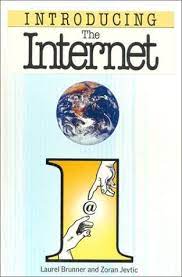
Deadlines are the only way that stuff gets done, so needless to say I didn’t start writing Introducing the Internet until about a month before the text was due, and that was only because I had nothing else to write that was more distracting. The book’s editor was Richard Appignanesi and the illustrator was Zoran Jevtic. Fortunately all the reading paid off and the manuscript was delivered on time. 10,000 copies were printed and immediately another 10,000 flew off the press. Impressive I thought, that so many people wanted to know about the internet and the Worldwide Web. Embroiled in the miseries of the end of what had once been such happiness, I gave the book no further thought. But then royalty statements and cheques started coming it. Translation rights and sales, all that. Still, wallowing in cold sorrow and an uncertain reality, none of it meant much to me. I did press interviews acknowledged reviews, spoke on the BBC, all in a dark sad haze distinguished only by its depth and persistence.

It is only in the last couple of years that I have come to appreciate just how unique my experience with Icon was. They did offer to publish whatever else I fancied but the person making the offer was such a serious sleazeball I didn’t bother. The book spent time in the Sunday Times nonfiction chart and was translated into various languages, so it was undoubtedly a success. I forgot about the book altogether until recently. Looking at it again, given how old it is, it surprisingly still works. 

More recently, after slogging away with the odious crowdfunding process, Unbound published my first novel in 2019. Thank you Unbound for that and all the fish. Unbound’s marketing and author engagement can best be described as derisory, so it is unsurprising that The Draftsman has sunk without a trace. What a contrast to the internet book. Now I look back in amazement at my experience with Icon and their …for Beginners series and wonder how it happened. But I know how: as a jobbing writer at a time when publishers sought out authors, I was lucky. And so were Icon. That is how these things work. Today the world of authoring is a much more crowded one and the serendipity that brought together Icon Books and Laurel Brunner is infinitely more random. Maybe that’s why life as a writer has these days become so weird. But weird is good. It’s how we spot the normal, at least what might be.

Daddy’s Gone A-Hunting by Penelope Mortimer – A review

This book was originally published in 1958, but it’s a story we should all revisit. Not that Daddy’s Gone A-Hunting is peerless prose or a wild tale of derring-do. It is neither. Rather, this book is a glimpse of a place in time where men and women were on the edge of massive, generational change.

The approaching transition was from the cosy but fragile reality of the traditional, nuclear family to something much edgier. In this new something people divorced without stigma, lived together without being married and sat on each other’s laps in public. Women were on the verge of all the freedoms that sheer tights, short skirts and the contraceptive pill conferred. They were ready to turn away from conventional social constrictions and personal repression, towards something much more dangerous and risky. 

But in 1958 that was all yet to come. Postwar 1950s Britain was still a seriously limited world, a world where rationing hadn’t finished until 1954 and where Hitler’s ghost still cast a long and menacing shadow. People were subdued and passive, locked in the same class cage as before the war. With Naziism defeated the only war they faced was the Cold War, something too abstractly horrific to truly get their heads around. In this fifties world people clung to traditional roles, to old and dessicated habits because anything different or new was too terrifying. The thought of any kind of upheaval or change was direct trauma.

For most people, ideas that there could be alternatives to pre-war expectations, to new freedoms and roles, had an irrational power to instill fear. It was just too much to think about. Read the novels of Kingsley Amis and the poetry of Philip Larkin and amidst the brilliance you read a celebration of the ordinary and the pre-war status quo. Popular stories, novels and plays were about the quotidien, the unquestionable joys of the steady and reliable British routine. And we had a burgeoning of fantasies and escapism like The Borrowers and the Lord of the Rings presenting alternative safe presentations of struggle and triumph, to replace the horrors of war that had been on the doorstep.

Daddy’s Gone A-Hunting does none of this, but it does challenge the cosiness of the ordinary lives people were encouraged to live and any escapist fantasies they might have had. The decade was marked by economic growth and technological advance. Economic growth made the life of a housewife more exciting because she could shop at will for household appliances and stuff for herself and her family. Technology made life more convenient; television added scope for idle entertainment. But such advances also encouraged people, especially women, to question shifting individual expectations. They wanted to better understand what it means to have a fulfilled life and how to go about having one.

Penelope Mortimer’s Daddy’s Gone A-Hunting is clearly drawn from her own life’s experience as a wife, mother and housewife, and of her own frustrated intellect. In sparse and economical prose she presents a middle-class, white family living in what would once have been described as the stockbroker belt. Ruth and Max  Whiting have three children, two pre-teen boys who go to boarding school and an older daughter in her first year at Oxford. An unplanned but approaching birth is the reason for the daughter’s parent’s marriage in the first place, although Angela doesn’t know this. Angela thinks she’s in love and then she too falls pregnant. The young man in question is a carbon copy of her father at about the same age and situation in life.

Abortion wasn’t an option for Ruth and Max, but it has become unquestionably possible for Angela and Tony, even though it’s still illegal. This odious young man has contrived a personna of male authority, hiding his selfish and sleazy character without even a smidge of awareness that he is doing so. He has no moral compass, no sympathy for his girlfriend, no question of any response other than minimising his culpability. All this is carefully hidden behind a mimicry of traditional expectations of male behaviour, bluster and the puerile affectations of youth. That he wants to live up to the responsibility for getting himself and Angela out of a dreadful situation is fine in theory. But as he acts out the part, he lacks the moral courage or even the slenderest shred of nerve to face the horror of the proposed solution. Or its cost. In this regard perhaps not much has changed since the fifties.

But Ruth has been there before and can understand what needs doing, although how to do it is a harder problem. Her daughter’s child, although it will be aborted, becomes fictionalised in Ruth’s imagination. These imaginings are proxies for Ruth’s own future, although she wants to believe that the child will never be born. Daddy’s Gone A-Hunting takes its name from the nursery rhyme which plays on a tiny music box, Ruth has bought for a neighbour’s little girl. She decides to keep it and it becomes a talisman, a reference throughout the novel for Ruth’s need for something reliable and consistent. A bit like how women are these days with their mobile ’phones, the music box gives her something tangible, a reference point. It’s a reminder to keep her feet on the planet. Solving the pregnancy problem for Angela and imagining her unborn child’s fictitious life, together jolt Ruth forwards so she appears to slowly move away from her own nervous collapse. 

Nervous collapse was hidden too in the fifties, just like abortion, poverty, failure, affairs. Many of these are still hidden along with anything else that could be considered embarrassing or in need of response. But people today have far higher trust that their frailties might be accepted, their expectations realised. They have far more routes and support for resolutions and towards achieving their goals. Opportunities to express oneself through words, images, sound and any other form of narrative one might think of abound. The internet fuels a perennial explosion of ideas, expressions and opinions, reverberating endlessly, every moment of every day. Central to this inexhaustible supply of content is an obsession with self and individual identity, with the desperate need to express a unique persona and universal validity. Daddy’s Gone A-Hunting is a reminder that such luxuries are relatively new for most ordinary people and especially that they have been very, very hard won. We, men, women and other, have travelled a massive journey and Daddy’s Gone A-Hunting shows us a tiny bend in a very long road. That’s why we should read this book again.

Constance Wilde’s Autograph Book edited by Devon Cox

Constance Wilde, born in 1858, was the wife of Oscar and the mother of his two sons, Cyril and Vyvyan. Two years after her marriage to Oscar Wilde in 1884, Constance started an autograph book for which she continued to collect entries until 1896. There are 62 in all, mostly provided by invited contributors during Constance’s At Home events. But by 1896, her husband was in prison having been convicted of ‘gross indecency’ and Constance was in exile in Italy. After Constance died in 1898, two years before Oscar, the whereabouts of the autograph book were unknown. 

It resurfaced at auction in 1987 and Mary Hyde bequeathed it to the British Museum in 2003. The British Museum kindly gave the Oscar Wilde Society permission to produce a facsimilie reproduction of the book. Joan Winchell, a longstanding member of the society, donated funds to make possible the book’s production. Devon Cox managed the project.

Constance’s autograph book is an unparalleled window into manners, behaviour, expectations and the nature of celebrity in late nineteenth century London. Constance was very considered in her invitations to contribute to her autograph book, so it has entries from a diverse group of men and women, from Prime Ministers and actors to musicians and spiritualists. And it has some interesting omissions, such as Oscar’s soon to be growing group of male friends.

The entries range from the profound to the peculiar. G. F. Watts painter and sculptor put “our greatest happiness should be found in the happiness of others” and “you did not promise to be her mother-in-law” is playwright Elizabeth Merivale’s rather odd contribution. And although her husband’s renown was obviously helpful in gaining signatures, the autograph book clearly reflects Constance’s independent values, spirit and aspirations. Oscar’s entry, the second in the book following that of Oliver Wendell Holmes, is unsurprisingly the most intimate of all. It reads: “from a poet to a poem” and although Oscar has used this line elsewhere in his work, it is no less touching an expression of his respect and admiration for his wife. At least at the time, when she was still the love of his life.

So why should we care about the autograph book of a woman long dead and buried, who died tragically young and whose life was so overshadowed by her glamorous husband? Isn’t this little autograph book just an elaborate form of name-dropping, of literary showing off? Yes, it is an exercise in name dropping, but these names are not just collected, Constance Wilde has deliberately curated them and this is part of the fascination of the book. The names so assiduously gathered, reflect some sliver of Constance’s spirit and values. Artists and poets feature heavily, as do actors including Henry IrvingEllen Terry and Sarah Bernhardt.

In the beginning of their marriage Oscar’s fame and notoriety dominated Constance’s life, and then shame and notoriety were ascendant. They forced Constance to leave the country and change her and her children’s names. First glamour and then misery. But somewhere in that glorious and successful phase of Oscar’ life, first as a heterosexual man, then as a bisexual one and then homosexual, Constance was in love and happy. Oscar too was in love and happy. The autograph book was mostly created during this period of their lives, when Constance was emerging as a socially and politically independent woman. A woman sufficiently confident and bold to hold her own in Oscar’s orbit, albeit fleetingly.

Constance was his soul mate and lover, intellectually for a little while and briefly physically. But Oscar was a serial explorer both intellectually and sexually, so it never was going to last long. Apart from their two boys, there are very few expressions of Constance in Wilde’s life. Her autograph book gives us a small shred of insight into the woman and her life with one of the world’s greatest authors. With contributions from artists such as James Whistler and William Morris, from politicians such as Gladstone, through to authors including Mark Twain and George Meredith, the book reflects Constance Wilde’s life and times but also her eclecticism. It’s a wonderful thing indeed. 

Devon Cox has overseen the production of the project and even if you don’t fancy reading all the musings in the book, his introduction alone is worth the purchase. You can buy it here: https://oscarwildesociety.co.uk/autograph-book/

PS Is it just me or is there a striking similarity in looks between Constance and Bosie?